
 Francesca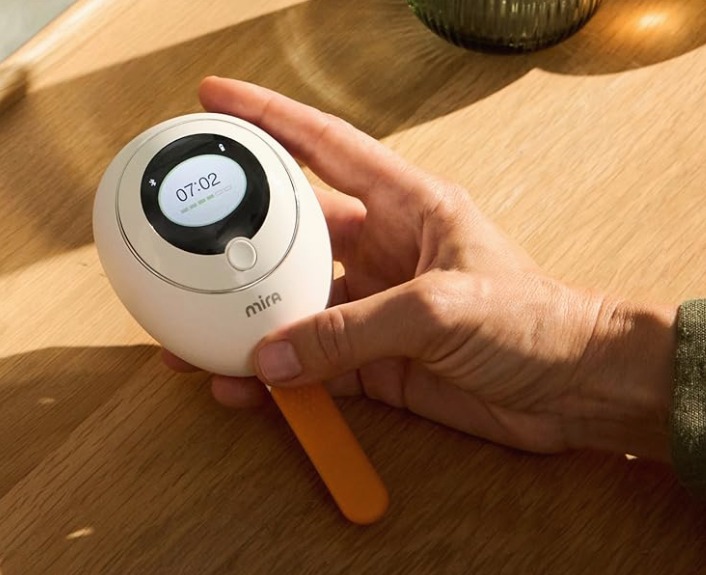
For decades, women trying to understand their bodies had surprisingly limited tools. A thermometer on the nightstand to measure basal body temperature. Ovulation strips used once a day. Or, in more complex situations, a doctor’s appointment followed by blood tests that captured only a brief snapshot of hormone levels.
The problem is that hormones do not behave like snapshots. They behave more like waves.
Across the menstrual cycle, estrogen, progesterone, luteinizing hormone, and other biological signals rise and fall constantly. These fluctuations influence energy levels, mood, metabolism, sleep quality, and fertility. Until recently, most of those patterns remained largely invisible outside clinical settings.
A new generation of fertility wearables is beginning to change that reality. Devices such as the Oura Ring, the Mira Fertility Tracker, and emerging innovations like the Petal Fertility Wearable and the Clair Hormone Tracking Bracelet are redefining how women monitor reproductive health.
Instead of relying on isolated measurements once a day or once a month, these technologies attempt to provide continuous insight into the body’s biological signals. What we are witnessing is the beginning of a new category in health technology: real-time hormonal intelligence.
The Rise of Fertility Wearables
For years, fertility awareness methods depended on indirect clues. Basal body temperature increases after ovulation. Cervical mucus changes throughout the cycle. Ovulation predictor kits detect the luteinizing hormone surge that occurs shortly before ovulation.
While these tools are valuable, each one captures only a small fragment of a much larger physiological process.
Modern wearables aim to fill this gap by collecting thousands of data points each day. Skin temperature, heart rate variability, respiratory rate, sleep stages, electrodermal activity, and movement patterns can all reflect subtle hormonal shifts. When these signals are combined with advanced algorithms and machine learning models, they can provide a much richer picture of the menstrual cycle.
The goal is not simply predicting ovulation. Instead, the new generation of devices aims to understand the entire hormonal rhythm of the body.
Petal: A New Approach to Hormonal Insight
Among the newest and most unconventional fertility wearables is the Petal Fertility Wearable.
Unlike traditional devices worn on the wrist or finger, Petal collects data directly from breast tissue. Researchers selected this location because breast tissue is highly responsive to hormonal fluctuations, particularly changes in estrogen and progesterone levels during the menstrual cycle.
How Petal’s Technology Works
Petal relies on bio-impedance sensors that measure small variations in electrical resistance within the tissue. These changes can shift subtly across different phases of the cycle. The device collects these signals and processes them through proprietary algorithms designed to identify hormonal patterns.
By combining these measurements with cardiovascular and metabolic indicators, Petal attempts to estimate cycle phases and detect broader hormonal trends.
This approach reflects a growing shift within femtech: fertility tracking is evolving from single measurements toward comprehensive biological monitoring.
Clair: The Vision of Continuous Hormone Monitoring
Another highly ambitious innovation is the Clair Hormone Tracking Bracelet.
Developed by researchers with backgrounds in bioengineering and artificial intelligence, Clair aims to estimate hormonal fluctuations continuously through a wrist-worn device.
Signals Used to Estimate Hormonal Changes
The bracelet gathers multiple physiological signals throughout the day and night, including skin temperature, heart rate, respiratory rate, electrodermal activity, sleep architecture, and movement patterns.
Artificial intelligence models analyze these signals to estimate changes in estrogen and progesterone levels across the menstrual cycle. Early prototypes have demonstrated promising accuracy in predicting different cycle phases, even for individuals with irregular cycles.
If validated in large clinical trials, this technology could represent one of the first true continuous hormone monitoring systems available to consumers.
Oura Ring: The Quiet Pioneer of Wearable Cycle Tracking
Long before fertility wearables became a trend, the Oura Ring helped establish the foundation for passive cycle tracking.
Originally created as a sleep and recovery device, the ring collects an extensive range of physiological signals including heart rate, heart rate variability, respiratory rate, activity levels, and nightly body temperature trends.
During sleep, the device gathers thousands of temperature data points. These readings allow algorithms to detect the subtle temperature rise that typically occurs after ovulation.
Why Oura Became Popular for Fertility Awareness
When paired with fertility apps, Oura’s temperature data can help estimate fertile and non-fertile days throughout the menstrual cycle. For many users, the ring has become a passive fertility awareness tool.
Instead of remembering to take a basal temperature measurement every morning, the device collects physiological data automatically overnight and translates it into insights within the app.
This passive tracking experience has made Oura one of the most widely adopted wearables among women interested in understanding their cycles.
Mira: Lab-Level Hormone Testing at Home
While wearables estimate hormonal changes indirectly through physiological signals, the Mira Fertility Tracker takes a more clinical approach.
Mira measures hormone concentrations directly through urine testing. Users insert a test wand into the analyzer, which quantifies levels of key fertility hormones.
Hormones Mira Can Track
The system can measure hormones such as luteinizing hormone (LH), estrogen metabolites (E3G), and progesterone metabolites (PdG). These measurements are converted into personalized hormone charts within the mobile application.
Unlike traditional ovulation strips that provide only a positive or negative result, Mira delivers quantitative hormone levels. This allows users to observe detailed hormonal curves across their cycle and gain a clearer understanding of ovulation timing and hormonal balance.
The Future of Hormonal Health Technology
The rise of fertility wearables signals a broader transformation in women’s health.
Historically, female biology has been underrepresented in medical research, and many women have had to rely on intuition or fragmented data to understand their hormonal patterns. Continuous monitoring technologies are beginning to close that gap.
Devices capable of detecting subtle biological changes may eventually help women identify patterns related not only to fertility but also to metabolism, stress response, mood fluctuations, sleep quality, and physical recovery.
Researchers believe that, over time, continuous hormonal monitoring could also support earlier detection of conditions such as polycystic ovary syndrome, luteal phase defects, or the transition into perimenopause.
The trajectory resembles what happened with metabolic health technology. Continuous glucose monitors were once used primarily in clinical settings for diabetes management. Today they provide real-time insight into how diet, exercise, and stress affect blood sugar levels.
Hormone tracking may follow a similar path.
For generations, the question women most often asked while tracking fertility was simple: am I ovulating this month?
Now a far more sophisticated question is emerging.
What exactly are my hormones doing throughout the entire cycle?
For the first time, technology may finally be able to provide an answer.
Chicca Trends