
 Francesca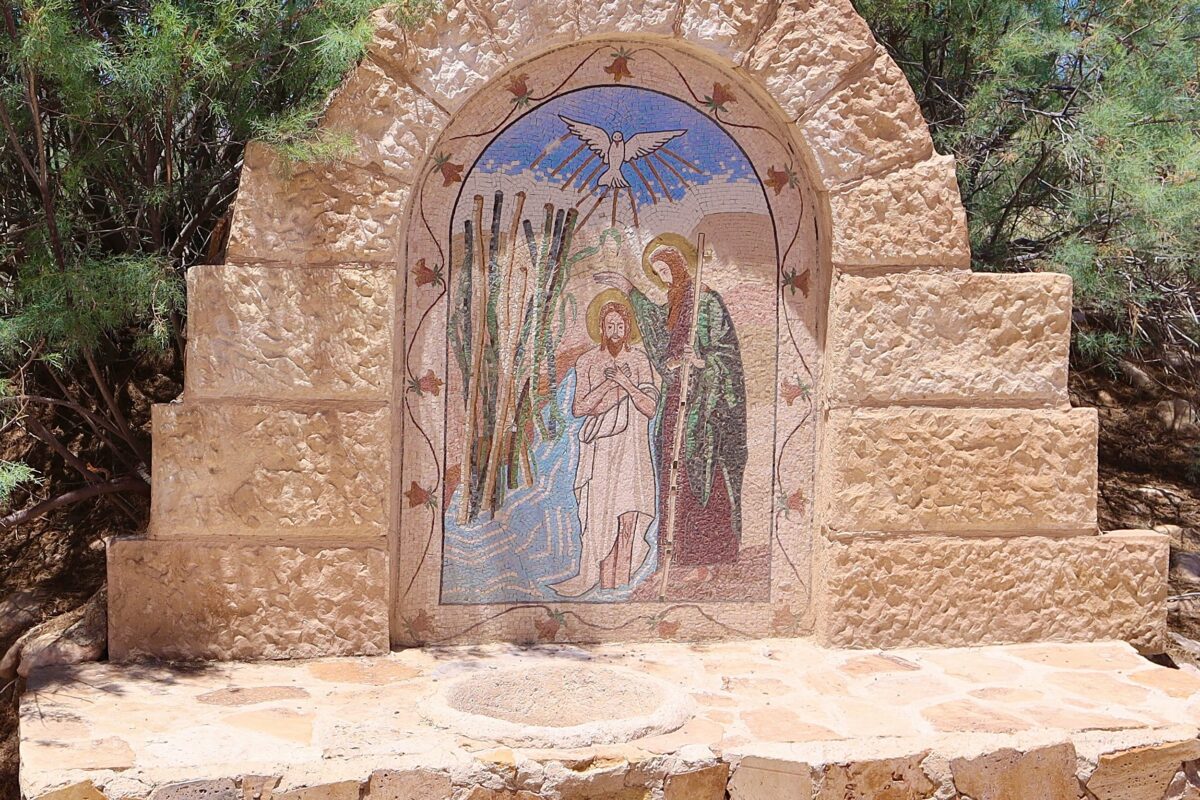
The Saint Who Stood Between Heaven and Earth
John the Baptist is one of the most familiar figures in the Gospels, and yet one of the most misunderstood. Many people remember him simply as the man who baptized Jesus, a voice crying out in the desert, a strange prophet dressed in camel hair. But within Catholic tradition, John the Baptist holds a role that is far deeper, richer, and more mysterious than most modern retellings ever explore. He is not just a supporting character in the story of Christ. He is a turning point in the entire history of salvation.
From the very beginning, John’s life unfolds differently from that of any other saint. His existence is marked by divine intervention, prophetic symbolism, and a mission that bridges two worlds: the long expectation of the Old Covenant and the fulfillment that arrives with Christ. To understand John the Baptist is to better understand the meaning of humility, obedience, and true spiritual greatness in the Catholic faith.
A Birth Unlike Any Other
In Catholic tradition, saints are usually celebrated on the day of their death, the day they enter eternal life. John the Baptist is the rare exception. The Church celebrates his birth on June 24, six months before Christmas, marking his unique place in salvation history. This is not a coincidence, nor a mere tradition without meaning. It reflects a theological truth about who John is and what God accomplished through him even before he was born.
According to the Gospel of Luke, John was sanctified in his mother Elizabeth’s womb when the Virgin Mary visited her during the Visitation. At the sound of Mary’s greeting, John leaped for joy within Elizabeth. The Church has always understood this moment as more than a physical reaction. It is seen as John’s purification from original sin, making him holy even before his birth. This is why his nativity, unlike that of other saints, is celebrated liturgically. John begins his mission before he ever sees the world.
This detail reveals something profound about how God works. John’s life reminds us that vocation is not something we invent or choose later in life. It is something God plants within us, often long before we are aware of it. John’s sanctification in the womb points to the deep Catholic belief that grace precedes effort, and that God’s call always comes first.
The First to Recognize Christ
One of the most striking truths about John the Baptist is that he recognized Jesus before anyone else ever did. Before shepherds, before magi, before disciples, before apostles, John acknowledged the presence of the Messiah. And he did so silently, hidden, without words or public witness. His recognition of Christ happened in secret, in the womb, known only to God and later revealed through Scripture.
The Church teaches that John’s leap in Elizabeth’s womb was the first act of adoration of Christ. This is a powerful theological insight. Before any sermon was preached, before any miracle was performed, before any crowd gathered, Christ was adored. John’s joy reveals the natural response of the human soul to the presence of God: recognition, reverence, and joy.
This moment also reveals John’s role as a forerunner not only in action, but in spirit. He prepares the way for Christ not just by preaching repentance later in life, but by being the first to respond to Him with humility and joy. In Catholic spirituality, this is a reminder that true recognition of Christ often happens quietly, internally, long before it is expressed outwardly.
The Last Prophet of the Old Covenant
John the Baptist occupies a unique and unrepeatable position in salvation history. Jesus Himself says that among those born of women, there has been none greater than John. At the same time, Jesus also states that the least in the Kingdom of Heaven is greater than he. These words are not contradictory. They reveal John’s precise place in God’s plan.
John is the last prophet of the Old Testament. He carries the voice of Isaiah, Elijah, and all the prophets who came before him. Like Elijah, he lives in simplicity and austerity. Like Isaiah, he proclaims repentance and prepares the way of the Lord. His message echoes centuries of prophetic longing. Yet unlike the prophets before him, John does not merely announce the coming of the Messiah. He sees Him. He touches Him. He points to Him.
This makes John the hinge between two eras. He stands at the threshold of fulfillment. He belongs fully to the Old Covenant in his prophetic mission, yet he introduces the New Covenant with his direct testimony of Christ. This is why the Church often refers to him as a “bridge” between the Testaments. His life marks the moment when promise turns into presence.
“Behold the Lamb of God”
Perhaps the most enduring words associated with John the Baptist are spoken when he sees Jesus approaching: “Behold, the Lamb of God, who takes away the sin of the world.” These words are not only a declaration. They are a revelation. John identifies Jesus using sacrificial language deeply rooted in Jewish tradition, pointing forward to the Paschal mystery.
For Catholics, this moment has profound liturgical significance. These words are echoed at every Mass, just before Communion. When the priest lifts the Eucharist and repeats John’s declaration, the Church relives that moment of recognition. John’s testimony continues to shape Catholic worship, reminding believers that Christ is both sacrifice and Savior.
What is often overlooked is that John does not claim any role for himself in this moment. He does not present himself as important or necessary beyond his mission. He simply points and steps aside. His greatness lies precisely in his willingness to disappear so that Christ may be seen.
“He Must Increase, I Must Decrease”
John’s most radical teaching is not about fasting, repentance, or baptism. It is about humility. When his disciples express concern that Jesus is gaining followers, John responds with words that summarize his entire life: “He must increase, and I must decrease.” This statement is one of the most powerful expressions of spiritual maturity in all of Scripture.
In a world that rewards visibility, influence, and recognition, John chooses obscurity. He understands that his role is temporary, that his mission is fulfilled not by building a following, but by giving it away. For Catholics, John becomes the ultimate model of detachment. He teaches that holiness is not measured by how much attention we receive, but by how faithfully we direct others to Christ.
This teaching has deep implications for Christian life. John shows that true discipleship involves surrendering personal ambition, ego, and control. His joy comes not from being admired, but from seeing Christ take center stage. In this way, John anticipates the spiritual path of the saints, who consistently choose humility over recognition.
A Martyr of Truth
John’s life ends as it began: in fidelity to God’s will. His martyrdom is not dramatic in the way modern storytelling often portrays heroism. He dies quietly, imprisoned, silenced by political power and moral corruption. His death is the result of speaking truth without compromise, even when it costs him everything.
The Church honors John as a martyr because he dies for righteousness. He refuses to remain silent in the face of sin, even when that silence would have spared his life. His martyrdom reminds Catholics that faithfulness does not always lead to success or safety. Sometimes it leads to suffering, and even death. Yet in God’s plan, this suffering is never wasted.
Why John the Baptist Still Matters Today
John the Baptist is not a distant historical figure. His life speaks directly to modern believers. In a culture obsessed with self-promotion, John teaches self-effacement. In a world that fears silence, he shows the power of listening. In an age of confusion, he points unambiguously to Christ.
For Catholics, John is not just someone to admire, but someone to imitate. His life challenges believers to ask difficult questions: Where am I pointing others? Am I making space for Christ to increase? Am I willing to step aside when my role is complete?
John the Baptist did not come to be remembered for himself. He came to prepare hearts. He came to announce hope. He came to stand between promise and fulfillment and then quietly move aside. In doing so, he teaches the Church a timeless lesson: the greatest life is not the one that draws attention, but the one that faithfully leads others to Christ.